Are you ready to dive into the fascinating world of film fan theories? There’s something uniquely thrilling about peeling back the layers of our favorite movies, unraveling hidden meanings, and speculating on the ‘what-ifs.’ Whether you’re a casual viewer or a hardcore cinephile, this collection of fan theories will ignite your imagination and perhaps change how you view these cinematic masterpieces.
From the eerie connections in post-apocalyptic landscapes to the hidden depths of beloved characters, these theories crafted by imaginative minds across the internet are sure to intrigue, amuse, and provoke thought. So, grab your popcorn and prepare to embark on a journey through the most captivating fan theories out there. Who knows, you might just find yourself inspired to concoct a few theories of your own!
Harry Potter: Snape and Neville
In the rich tapestry of J.K. Rowling’s “Harry Potter” series, the character of Severus Snape stands out for his complexity and moral ambiguity. A thought-provoking fan theory delves into Snape’s apparent dislike for Neville Longbottom, proposing that it stems from deep-seated guilt and regret. The theory suggests Snape resents Neville as a living symbol of an alternative history where Lily Potter might have lived. If Voldemort had targeted the Longbottoms following the prophecy, the Potters would have been spared, including Lily, whom Snape loved deeply.

This theory illuminates Snape’s character, portraying him as tormented by what-ifs and haunted by his indirect role in Lily’s death. His treatment of Neville, under this lens, is a manifestation of his unresolved grief and self-loathing. This interpretation adds a tragic dimension to Snape’s character, highlighting the series’ exploration of love, loss, and the burdens of guilt.
Jurassic Park: Dino Attack
Imagine this: the iconic Dilophosaurus scene in “Jurassic Park,” where Dennis Nedry meets his untimely end. Known for causing the park’s chaos, Nedry’s encounter with the dinosaur is ironic and terrifying.

However, have you ever pondered the dilophosaurus’ swift shift from seemingly playful to deadly? A fan theory proposes an intriguing explanation for this sudden behavior change. This perspective might reshape how we view this memorable scene, suggesting a more profound reasoning behind the dinosaur’s actions.
Willy Wonka: The Grand Prize
“Willy Wonka and the Chocolate Factory” is a childhood favorite. Still, its whimsical surface hides darker undertones, primarily upon rewatching as an adult. Consider the fates of the other children: their outcomes remain ambiguous but possibly grim.

This leads to an intriguing fan theory about the film’s ending. When Charlie inherits the factory, it appears to be a dream come true. But could a more sinister reality lurk beneath this supposed fairytale ending? This theory invites us to re-examine the conclusion through a more critical lens.
Batman: Names
Batman, a multifaceted character, varies greatly across different adaptations. His essence shifts from the lighthearted 1960s TV portrayal to the brooding figure in recent films. A fan theory explores this: despite his severity, Batman embodies an underlying hopefulness.

This theory suggests that Batman’s reluctance to deal with his adversaries lethally stems from hope for their redemption. This perspective adds depth to Batman’s character, emphasizing his complex morality.
Captain America: Red Skull
In “Captain America: The First Avenger,” we meet Red Skull, a formidable antagonist whose origins and bizarre appearance are not deeply explored in the film. A fan theory offers a compelling backstory for Red Skull’s distinctive look.

This speculation adds an intriguing layer to the character, potentially enriching the narrative. Could this fan-proposed origin story enhance our understanding of Red Skull’s character in the Marvel Cinematic Universe?
Interstellar: Prequel to The Road
Though seemingly unconnected, the films “Interstellar” and “The Road” might share a deeper narrative link, according to an exciting fan theory. “Interstellar” depicts a desperate search for a new world as Earth deteriorates. At the same time, “The Road” shows a hopeless, post-apocalyptic reality.

Could the events in “Interstellar,” particularly the wormhole travel, have unknowingly set the stage for the grim future in “The Road”? This theory invites a reconsideration of the relationship between these two cinematic worlds.
Batman: The Joker
In the Batman saga, the Joker is an enigmatic and recurring adversary. Various adaptations have offered different takes on his origin. Still, a new theory presents a novel perspective: what if the Joker is not an individual but a toxin that infects people?

This idea provides a fresh lens through which to view the Joker, possibly explaining his enduring presence and varied incarnations in the Batman universe.
SpongeBob SquarePants: The History of Bikini Bottom
Dive into this mind-bending theory about “SpongeBob SquarePants”: the quirky residents of Bikini Bottom, including SpongeBob, Patrick, and Squidward, might be the product of nuclear testing at Bikini Atoll. This speculation links the show’s setting to the real-world nuclear experiments of the 1940s and 1950s.

The idea is that radiation mutations gave rise to these unique underwater characters. From SpongeBob’s unusual shape to the distinctive traits of his friends, this theory offers a fascinating origin story for the beloved sea creatures of Bikini Bottom.
HIMYM: Ted as an Unreliable Narrator
“How I Met Your Mother” captivates audiences with Ted’s storytelling, but here’s a twist: what if Ted is an unreliable narrator? This theory challenges the show’s core, suggesting Ted may be skewing events to portray himself or others in a particular light.

Could the story as we know it be colored by Ted’s biases or selective memory? This possibility opens up a world of interpretation, questioning the authenticity of the storylines we’ve come to love.
The Office: Kevin’s Scheme
Here’s a curveball about Kevin Malone from “The Office”: what if his dim-witted demeanor was a ruse to cover up a secret gambling addiction and embezzlement scheme? Fans point out Kevin’s earlier competence and mysterious ability to buy a bar after being fired.

This theory adds unexpected depth to Kevin’s character, proposing his bumbling persona as a strategic mask for more nefarious activities.
The Flintstones and the Jetsons
Imagine a future where “The Flintstones” and “The Jetsons” coexist, representing a society divided by class. In this theory, the Flintstones’ world is a primitive, impoverished Earth surface, contrasted with the Jetsons’ high-tech, luxurious sky society.

This interpretation suggests a dystopian reality where the elite has abandoned the ground, leaving the less fortunate in a retrograde existence, adding a layer of social critique to these animated classics.
Yogi Bear: Names Etc.
In the world of Yogi Bear, the varying appearances of Ranger Smith are not errors but a reflection of a succession of rangers, each realizing the futility of enforcing human laws in the wild.

This theory suggests that “Smith” might be a common placeholder name, used either coincidentally or because Yogi, despite his intelligence, doesn’t discern human identities well. This adds an intriguing twist to the series, highlighting the eternal struggle between humanity’s desire for order and nature’s indomitable spirit.
Inception: Two-Fold Theories
“Inception” remains a cinematic enigma, but fan theories offer new insights. One posits that Cobb’s actual totem is his wedding ring, not the spinning top, with its presence indicating reality or dreams. Another theory suggests that Ariadne was hired to incept Cobb himself, aiding him in overcoming his guilt and the trauma surrounding Mal’s death.
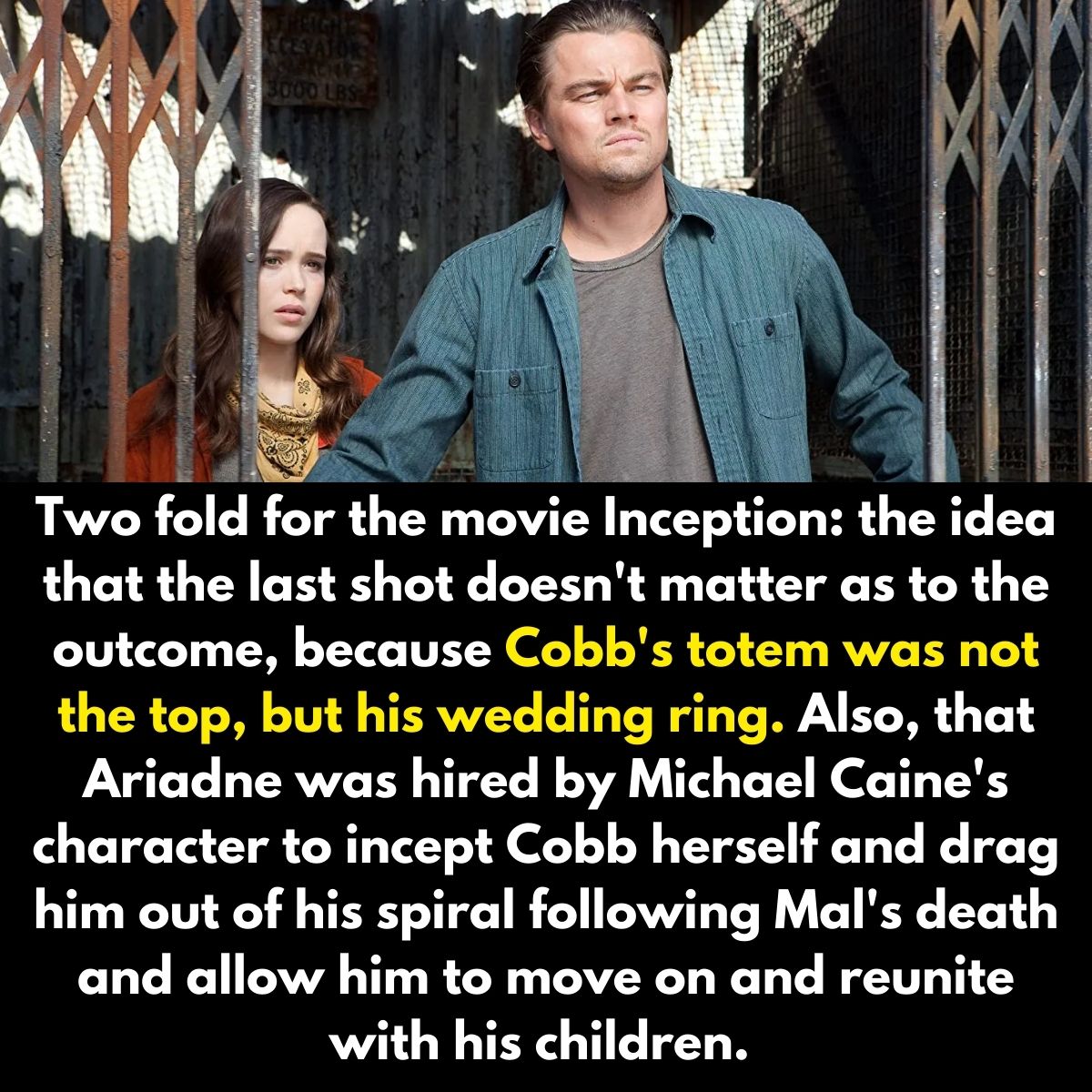
These interpretations add complex layers to the film’s narrative, inviting viewers to further explore the depths of Christopher Nolan’s masterful storytelling.
World War Z: The Infection Paradox
In ‘World War Z,’ a captivating fan theory emerges from the ashes of the apocalypse: Gerry was already infected. This theory spins a tale of Gerry’s unlikely survival. It centers around a pivotal moment where he rescues Tommy, a young boy who miraculously survived the outbreak. If we entertain this twist, Tommy might be the carrier of a lethal pathogen, unbeknownst to him, which he then transmits to Gerry.

This subtle yet lethal infection may explain Gerry’s almost supernatural evasion of zombie confrontations throughout the film. This hypothesis adds a layer of complexity to the narrative, suggesting that Gerry’s salvation could be attributed to an unseen, silent protector coursing through his veins. Such a revelation may alter the film’s interpretation and reframe Gerry’s encounters with the undead in a chilling new light.
Hey Arnold: Helga’s Mom
A deeper look at “Hey Arnold!” reveals layers of complexity in its characters, particularly in Helga’s mom. This fan theory posits that she struggles with addiction, a mature theme subtly portrayed in a children’s show.

This perspective sheds light on the nuanced writing in “Hey Arnold!” where adult themes are cleverly interwoven, allowing the show to resonate with viewers of all ages. It’s a testament to the show’s depth, presenting characters with real-life challenges while maintaining its appeal to a younger audience.
James Bond: His True Identity
The enigma of James Bond takes a fascinating turn in this fan theory: “James Bond” is not one man but a title passed down to various MI6 agents. This interpretation elegantly explains the changing faces of Bond over the decades, framing each portrayal as a different agent assuming the legendary code name.

It adds a layer of intrigue to the franchise, suggesting a lineage of spies, each contributing to the enduring legacy of Bond, adapting and evolving with the times.
Inception: Yusuf Wet Himself
Amidst the cerebral twists of “Inception,” a lighter fan theory emerges: Yusuf’s rain comment in his dream might be a humorous reflection of him wetting himself in reality.

This playful speculation injects a dose of humor into the film’s complex narrative, reminding viewers that even in the most sophisticated stories, there’s room for unexpected, comedic moments that enhance the overall experience.
The Rock: A Continuation of James Bond
In a thrilling crossover theory, Sean Connery’s character in “The Rock” is speculated to be an extension of his iconic James Bond role. Fans theorize that Connery’s John Mason is actually Bond, disavowed and presumed dead, who reemerges as the rogue agent in “The Rock.”

This theory bridges two legendary spy personas, adding an exciting dimension to Connery’s portrayal and enriching the narrative of both films.
John Wick and Killing Eve: The Same Universe
The worlds of “John Wick” and “Killing Eve” are imagined to intertwine in this captivating theory. Fans envision a shared universe where the intense, clandestine lives of John Wick and Eve Polastri intersect.
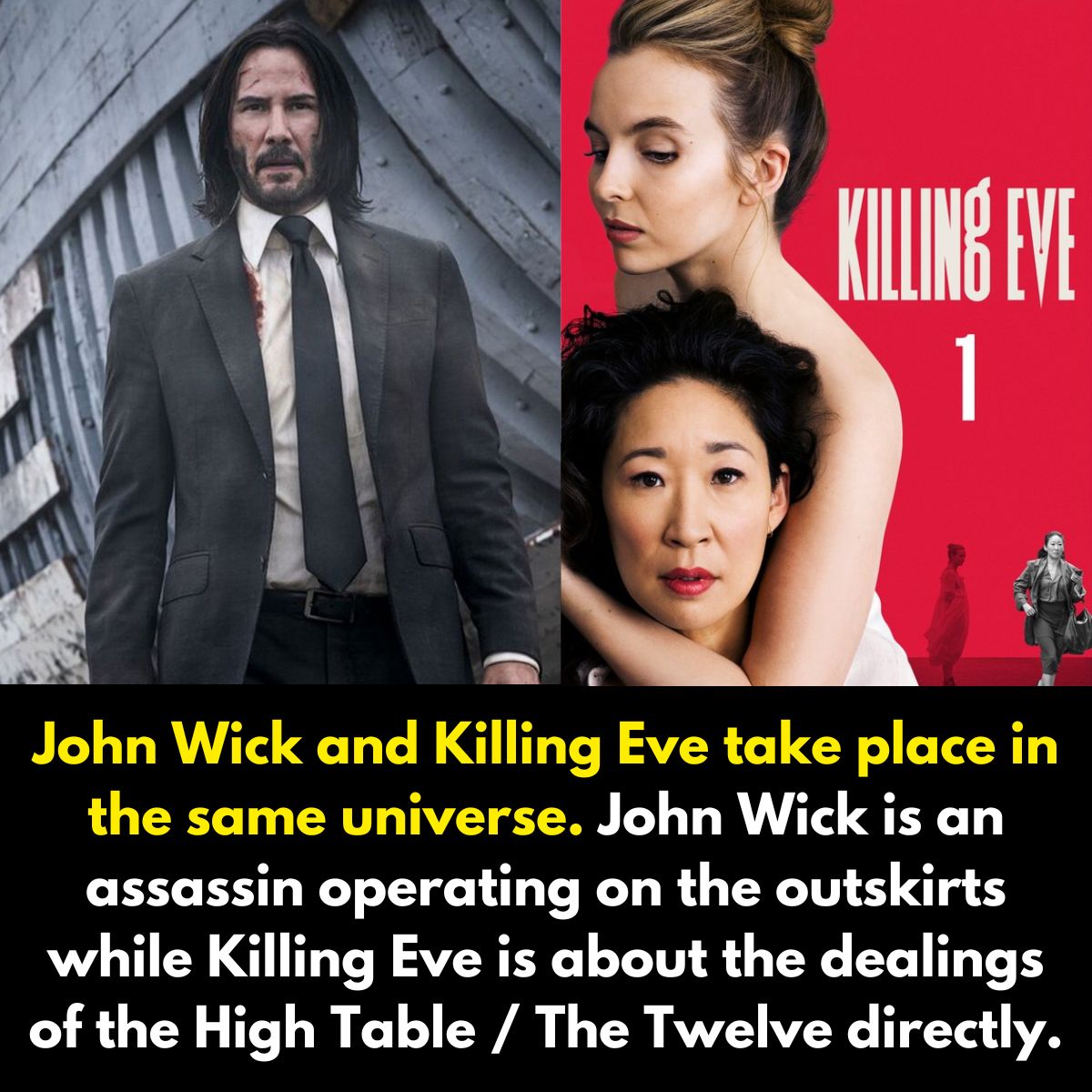
This speculative crossover creates a thrillingly complex tapestry of assassins and espionage, suggesting a larger, interconnected world of intrigue and danger where these characters’ paths could converge.
Snow Piercer: Willy Wonka Owns the Train
An outlandish theory connects “SnowPiercer” and “Willy Wonka,” suggesting that Willy Wonka himself controls the train in “SnowPiercer.” In this bizarre twist, Wonka, driven by his obsession with perpetual motion and lacking Oompa Loompas, repurposes children for the train’s maintenance.

The theory casts the ‘W’ symbol seen in the show in a dark, new light, creating a provocative and unsettling narrative link between two distinct stories.
Guardians of the Galaxy: Groot’s Name
In the cosmic realm of Marvel, Thor’s ability to understand Groot’s language opens up intriguing possibilities about Groot’s name. The fan theory suggests that there might be more to Groot’s name than meets the eye.

While naming a tree-like being “Tree” seems straightforward, perhaps his parents lacked creativity, or a deeper cultural significance in his name is yet to be uncovered. This detail enriches the Marvel Universe, highlighting untold stories and cultural depths within its diverse characters.
Avatar: Iroh’s Tea
In “Avatar: The Last Airbender,” Uncle Iroh’s love for tea might be more than a simple preference. A fan theory posits that Iroh’s affinity for tea symbolizes his belief in peace and harmony among nations.

As tea blends different elements harmoniously, Iroh, a beacon of wisdom, embodies this blending, promoting unity in a divided world. This interpretation adds depth to Iroh’s character, aligning his love for tea with his broader philosophical outlook.
Spiderman: Sewing Skills
The creation of Spiderman’s costume has puzzled fans, leading to a theory questioning Peter Parker’s sudden sewing prowess. While some argue that financial constraints might have honed his sewing skills, creating a complex superhero costume from scratch is a far cry from basic mending.

This speculation adds a realistic angle to Spiderman’s story, highlighting the unlikely scenario of an amateur tailor crafting such an intricate outfit, and invites us to consider the overlooked aspects of superhero origins.
The Incredibles: Robot Battle
In “The Incredibles,” Mr. Incredible’s triumph over a robot might not be solely due to his strength. A fan theory suggests that the robot, designed to combat a specific superhero’s abilities, was ill-prepared for Mr. Incredible’s unique powers.

This perspective adds a strategic layer to the film’s narrative, proposing that the robot’s defeat was more a matter of tactical mismatch than sheer power, and adds depth to the villain’s scheme.
Futurama: Suicide Booths
“Futurama” may have touched on a profound societal issue by depicting suicide booths. In a world where aging and death can be conquered, these booths might not just be a humorous element but a necessary, albeit dark, solution to an immortal society.

This theory explores the potential consequences of curing death, suggesting that the show subtly addresses the ethical and societal dilemmas of an ageless future.
The Godfather: Cause of Death
A gripping theory in “The Godfather” suggests Vito Corleone’s death was not a natural occurrence but a deliberate assassination by his son, Michael. This theory portrays Michael as a mastermind, orchestrating his father’s death with a poison like DDT, further cementing his ascent as a ruthless mob boss.

While speculative, this interpretation adds a layer of intrigue and complexity to the film, painting Michael’s character arc as even darker and more calculated than it appears on the surface.
Bruce Almighty: God or Devil?
The film “Bruce Almighty” presents a fascinating scenario where Bruce, a disgruntled TV anchor, is temporarily endowed with God’s powers. This divine intervention is portrayed as a learning experience for Bruce, leading him to appreciate the complexities of divine responsibility. However, a captivating fan theory posits a darker narrative: what if the character played by Morgan Freeman wasn’t God but Satan masquerading as the Almighty?

This theory suggests that the chaos and turmoil in the city, which seem mischievous and malevolent, align more closely with the devil’s playbook than with a benevolent deity’s lessons. The moral ambiguity and ethical dilemmas Bruce faces could be a devilish ploy to lead him astray rather than divine tests of character. If revealed, this twist would turn the film’s message on its head, suggesting that Bruce’s journey was not about understanding divinity but being manipulated by malevolence.
Bojack Horseman: The Ending
“Bojack Horseman” is renowned for its unique blend of dark, introspective storytelling and offbeat humor. One fan theory, crafted before the show’s conclusion, humorously speculated that the entire series was leading up to an elaborate punchline, essentially the longest joke setup in television history. While not realized, this prediction reflects the show’s ability to defy expectations and blend genres. The theory captures the essence of “Bojack Horseman” — its capacity to tread the line between comedy and tragedy.

Had it been true, such an ending would have epitomized the show’s narrative style, culminating in a moment of absurdity that simultaneously acknowledges the depth and complexity of its characters’ journeys. This approach to storytelling, where profound themes are interlaced with humor, endeared the show to its audience, making the theory an amusing reflection of its unique charm.
Hotel Transylvania: Dracula’s Revenge
The animated film “Hotel Transylvania” is primarily seen as a lighthearted family movie. Still, a fan theory proposes a more complex backstory for its protagonist, Dracula. The theory suggests that Dracula’s creation of the hotel and his control over the zombie staff are driven by a quest for power and control stemming from his tragic past.

According to this theory, Dracula uses his supernatural abilities to manipulate and dominate those around him, possibly as a response to the helplessness he felt during his own tragic experiences. In this narrative, the zombies are not just comedic side characters but represent the culmination of Dracula’s need for unquestioning loyalty and control. This perspective paints Dracula in a more nuanced light, as someone who has turned his grief and desire for revenge into a need for dominance, adding depth to the otherwise comedic portrayal of the character.
Aladdin: Genie’s Scheme
In Disney’s “Aladdin,” the Genie, portrayed as a whimsical and powerful character, is a favorite among fans. A fan theory adds a layer of cunning to Genie’s character, suggesting that his approach to Aladdin’s wish to become a prince was strategically thought out. Instead of an instant magical transformation, the Genie orchestrates a series of events leading to Aladdin’s marriage to Princess Jasmine, securing his status as a prince.

This theory proposes that Genie’s magic was used not just for spectacular effects but as part of a larger plan to ensure Aladdin’s success. It highlights Genie’s role as a magical servant and a wise and strategic guide, helping Aladdin navigate the complexities of love, identity, and social status. This interpretation adds a deeper understanding of the Genie’s character and his contribution to Aladdin’s journey.
Batman: The Joker’s History
The Joker, Batman’s arch-nemesis, is shrouded in mystery and intrigue. A popular fan theory adds depth to his enigmatic persona by suggesting that he may have been a soldier traumatized by war. This theory points to the Joker’s cryptic reference to “a truckload of soldiers getting blown up overseas” as a hint towards his dark past.

The suggestion is that the Joker’s experiences in the military, perhaps involving horrific events or moral dilemmas, contributed to his descent into madness and shaped his chaotic worldview. This interpretation of the Joker’s character offers a potential explanation for his nihilistic philosophy and unpredictable behavior, framing him as a victim of circumstances turned villain. It underscores the complex nature of the character, blurring the lines between villainy and tragedy in the Batman universe.
Shrek: His Name
The beloved character Shrek, known for his gruff exterior and solitary lifestyle, has a name that seems to fit an ogre perfectly. However, a fan theory suggests that the name “Shrek” was actually an impromptu creation by the character himself. In the first movie, when Donkey inquires about his name, Shrek hesitates before responding, leading to speculation that he has never actually named himself.

This theory adds a charming touch to Shrek’s character, portraying him as a simple, unpretentious being who, until that moment, had little need for a name. It emphasizes his solitary nature and the fact that his interaction with others was minimal, aligning with the idea that he lives in his own world, unconcerned with societal norms or even the concept of personal identity.
Mary Poppins and IT
A fantastical theory connects the characters Mary Poppins and Pennywise from “It,” suggesting they could be of the same mystical species but feed on different human emotions. Mary Poppins, known for her positive influence on children, could draw energy from their happiness and joy.

In contrast, Pennywise thrives on fear and terror. This theory presents a duality of magical beings, one benevolent and the other malevolent, using their supernatural abilities to elicit and feed on solid emotional responses from children. It highlights the diverse manifestations of magic in storytelling, exploring the thin line between delight and horror and the power of these narratives to delve into the complexities of human emotion.
Rick and Morty: More Meta Than You Think
“Rick and Morty” is renowned for its self-referential and meta-humor, and a fan theory takes this a step further by suggesting that Rick is aware of his existence as a character in a TV show. According to this theory, Rick’s outrageous actions and constant pursuit of absurd adventures are driven by his desire to keep the show entertaining, ensuring his continued existence.

This adds an intriguing layer to Rick’s character, making him not just a genius scientist but a self-aware entity fighting for survival in entertainment. It aligns with the show’s unconventional storytelling and frequent breaking of the fourth wall, offering a unique perspective on why Rick behaves the way he does.
Toy Story: Woody’s Origins
Woody’s mysterious past in “Toy Story” has intrigued fans, leading to a theory about his origin involving a special cereal box promotion linked to a canceled TV show. This backstory explains Woody’s rarity and his unfamiliarity with his origins.

It also suggests a connection between Woody and Andy’s father, possibly explaining why Woody holds such sentimental value for Andy. The theory adds depth to Woody’s character, offering a plausible explanation for his unique status among the toys and his strong connection to Andy, further enriching the emotional narrative of the Toy Story series.
Encanto: Mirabel’s Gift
In Disney’s “Encanto,” Mirabel’s lack of a magical gift is a focal point of the story, leading to a fan theory that proposes her role is more significant than it appears. The theory suggests that Mirabel’s true gift is her ability to preserve and protect the magic of her grandmother’s legacy, which is vital for the community’s well-being.

This interpretation casts Mirabel as a key figure in maintaining the balance and harmony within her family and their magical home, highlighting her importance beyond the conventional understanding of magical gifts. It underscores the film’s themes of family, community, and the value of each individual’s role, regardless of their magical abilities.
Cinderella: True Love
In “Cinderella,” the Fairy Godmother’s decision to leave the glass slipper unchanged is reimagined in a fan theory as a deliberate choice to foster true love. By ensuring that the Prince searches for Cinderella based on their shared connection rather than her appearance, the Fairy Godmother elevates the importance of emotional bonds over physical attraction.
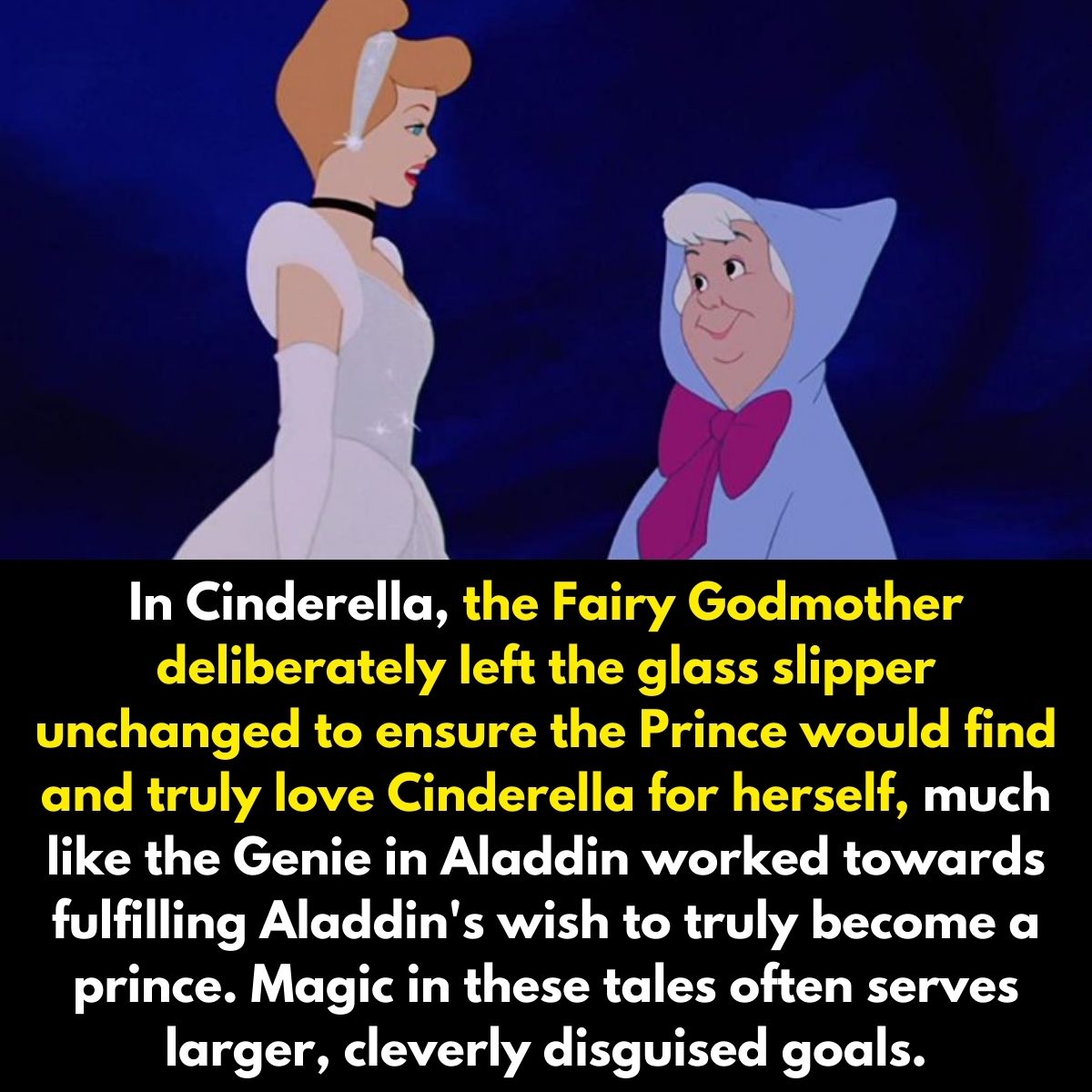
This theory adds a thoughtful dimension to the story, suggesting that the magical intervention was designed to test the depth and authenticity of the Prince and Cinderella’s connection, emphasizing the value of genuine love and emotional connection in relationships.
Terminator: Plasma Rifle
The original “Terminator” film, featuring Arnold Schwarzenegger, is a classic in the sci-fi genre, depicting a cybernetic assassin sent back in time. A notable scene involves the Terminator asking for a futuristic plasma rifle in a pawn shop. This moment seems out of place, given the film’s 1980s setting. A fan theory explains this as the Terminator working with limited information about his period.
This theory suggests that, programmed for a future where such weapons are common, the Terminator’s request reflects his lack of understanding of the technological limitations of the past. It adds a layer of complexity to the character, portraying him not just as an unerring killing machine but as a being confined by its programming and unable to adapt to the unfamiliar environment of the past.
SpongeBob SquarePants: Squidward and SpongeBob
In the world of “SpongeBob SquarePants,” SpongeBob’s constant cheerfulness, even in the presence of his grumpy neighbor Squidward, is one of his defining traits. A fan theory posits that SpongeBob’s persistent positivity around Squidward is a deliberate choice rather than naiveté.
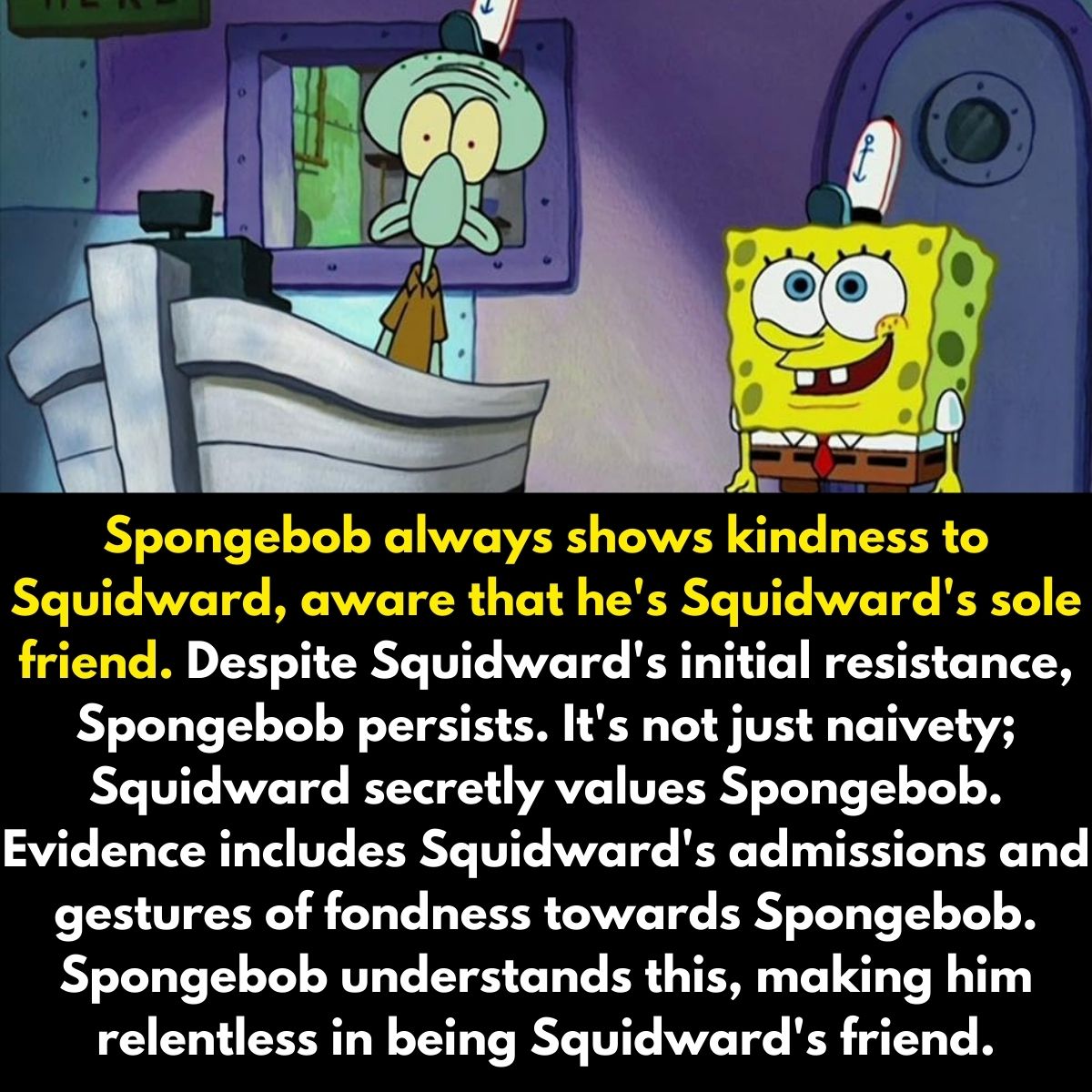
This perspective suggests that SpongeBob consciously chooses to remain optimistic and friendly, hoping to bring some happiness to Squidward’s life. It casts SpongeBob in a more empathetic and thoughtful light, highlighting his unwavering kindness and desire to positively influence those around him, even those who don’t readily accept it.
Star Wars: Palpatine and Padme
In the “Star Wars” saga, a fan theory explores a darker aspect of Palpatine’s influence, suggesting that he used the dark side of the Force to create a life-force bond between Anakin and Padmé. This Bond, the theory proposes, is why their heartbeats synchronize during Anakin’s duel with Obi-Wan and why Padmé’s health deteriorates as Anakin is incapacitated.

According to this theory, Palpatine’s intervention is directly responsible for Padmé’s mysterious death, making it a direct result of his manipulation rather than a simple loss of will to live. This adds a sinister layer to Palpatine’s character and a tragic twist to Anakin and Padmé’s love story, deepening the narrative of betrayal and manipulation in the “Star Wars” universe.
LOTR: The Fall of Gandalf
In “The Lord of the Rings,” Gandalf’s fall is pivotal and emotional. A fan theory suggests that understanding Gandalf’s significance in Middle Earth’s lore provides a deeper context to this event. For members of the Fellowship, especially those aware of Gandalf’s true nature and power, his loss would be shocking and devastating, signaling a dire turn in their quest.
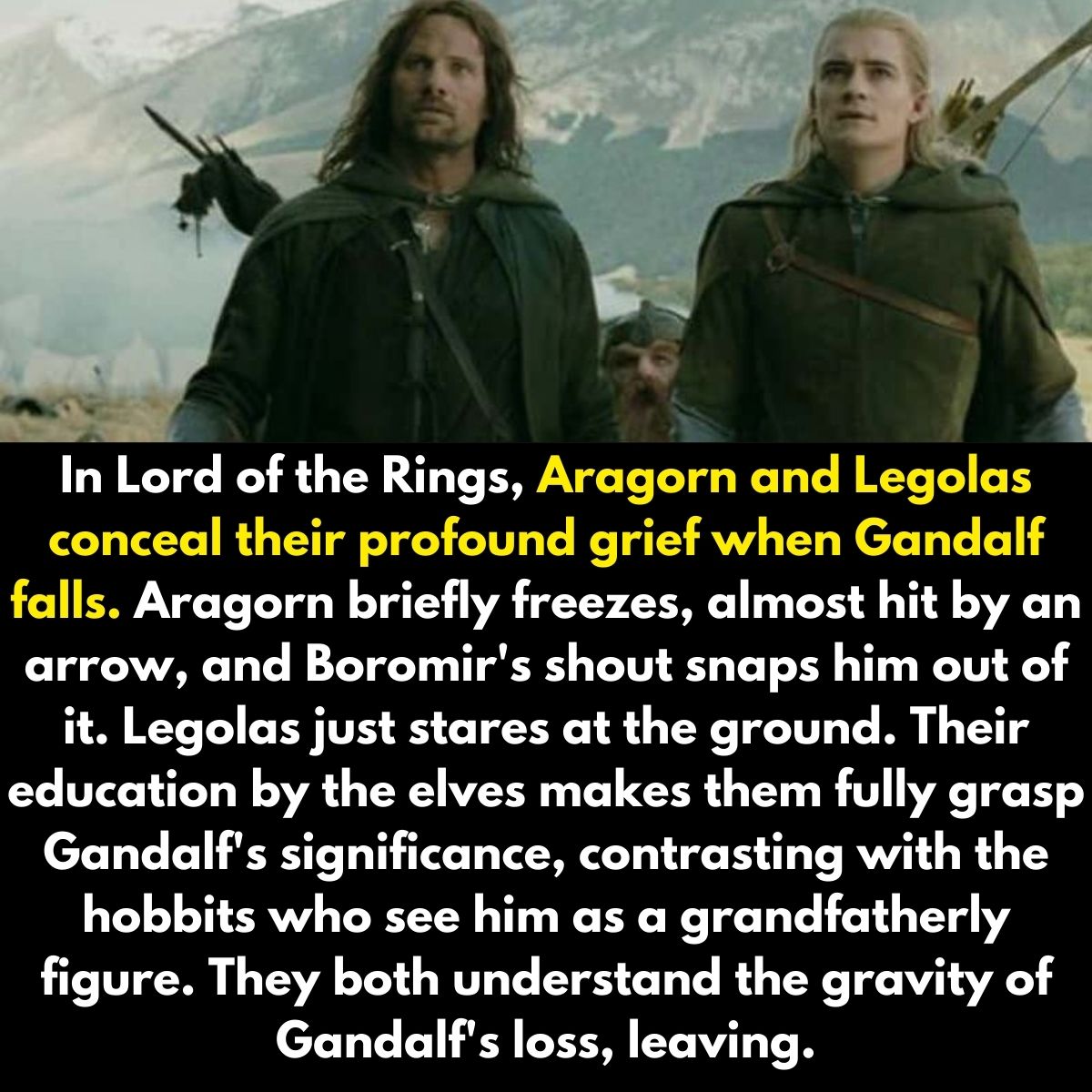
This theory highlights the importance of Gandalf beyond his role as a guide and mentor; his fall signifies the loss of a powerful ally against the growing darkness, adding a layer of despair and urgency to the Fellowship’s journey.
Guardians of the Galaxy: Drax’s Invisibility
In “Guardians of the Galaxy,” Drax’s attempt to make himself invisible, despite its obvious ineffectiveness, is a memorable and humorous moment. A fan theory suggests this action reflects Drax’s character – a blend of sincerity and naivety.

The theory posits that Drax’s belief in his invisibility is not just comic relief but a manifestation of his straightforward and literal approach to life. It highlights his unique perspective and honesty, making his character not just a source of humor but also a representation of innocence and purity in a complex universe.
Batman: The Bat-Signal
The iconic Bat-Signal in Batman lore is traditionally seen as a means for Gotham City’s police to summon Batman. However, a fan theory proposes that the Bat-Signal serves a dual purpose. Beyond calling Batman to action, it acts as a deterrent to criminals, reminding them of Batman’s presence and the potential consequences of their actions.

This theory suggests that the Bat-Signal is as much a psychological tool as a practical one, instilling fear in the hearts of would-be criminals and reinforcing Batman’s role as a guardian of Gotham. It adds a strategic layer to the use of the Bat-Signal, emphasizing Batman’s influence on the city’s criminal underworld even when he’s not physically present.
Harry Potter: The Power of the Wands
In the “Harry Potter” series, the significance of wands and their owners is a recurring theme, highlighting the unique Bond between a wizard and their wand. A fan theory explains why Ron and Neville initially struggle with magic. Ron uses a second-hand wand due to his family’s financial constraints, while Neville uses his father’s.

This mismatch between the wizard and their wand could cause difficulties in effectively performing magic. This theory not only explains the struggles of these characters but also underscores the deeper lore of Wandlore in the wizarding world, emphasizing the importance of a personal connection between a wizard and their wand for magical proficiency.
Evil Dead: Hallucinations
The “Evil Dead” franchise, known for its blend of horror and campiness, introduces a unique twist in its fourth installment. A fan theory suggests that the events of “Evil Dead” might be nothing more than a drug-induced hallucination sparked by the protagonist dumping drugs into a well.

This theory casts the entire narrative in a new light, potentially reframing the demonic encounters and supernatural occurrences as figments of a drug-fueled imagination. It adds a layer of psychological horror to the film, challenging the viewer’s perception of reality within the movie’s universe.
The Hobbit: Dwarves and Dinners
“The Hobbit” begins with a memorable scene where Bilbo Baggins is unexpectedly visited by a group of dwarves who consume his food voraciously. A fan theory suggests that this may have been a strategic move to empty Bilbo’s pantry in preparation for his impending adventure.

Alternatively, it might simply reflect the dwarves’ poor manners or cultural norms. This theory adds a practical dimension to the scene, proposing that the dwarves’ actions, intentional or not, facilitated Bilbo’s departure from his comfortable, predictable life and into the unknown.
Kung Fu Panda: The Dragon Scroll
“Kung Fu Panda” is beloved for its mix of humor, action, and life lessons. A fan theory about the Dragon Scroll proposes that it serves as a test of character, revealing how individuals react to disappointment. However, the theory raises questions about Master Shifu’s knowledge of the scroll’s true nature.

Shifu’s belief in its power to defeat Tai Lung seems contradictory if the scroll was indeed a test. This theory invites viewers to reconsider the film’s deeper messages, particularly about self-belief and the power of inner strength, while also questioning the extent of the character’s awareness of the scroll’s secret.
The Office: Bob Vance Refrigeration
In the mockumentary-style TV show “The Office,” the presence of a camera crew is a fundamental aspect of the series. A fan theory highlights Bob Vance’s frequent mention of his business, “Bob Vance Refrigeration,” as a clever use of free advertising.

By consistently introducing himself with his full name and company title, Bob Vance capitalizes on the documentary format to promote his business, showcasing his savvy understanding of marketing and brand visibility within the show’s universe.
Back to the Future: Doc Brown’s Inventions
In “Back to the Future,” Doc Brown is portrayed as an eccentric yet brilliant scientist. A fan theory suggests that his seemingly bizarre inventions, including a mind-reading helmet, might be as functional as his successful creation of a time machine.

This theory adds credibility to Doc Brown’s character, portraying him as a true visionary whose inventions, no matter how outlandish they appear, have the potential to work. It underscores the theme of innovation and the fine line between genius and madness, inviting viewers to reconsider the feasibility of Doc Brown’s other inventions beyond the iconic time-traveling DeLorean.
Harry Potter: Bad Omens
In the “Harry Potter” series, Professor Trelawney, known for her cryptic predictions, may have hinted at Dumbledore’s impending death. A fan theory suggests that clues to Dumbledore’s fate were present in Trelawney’s readings and omens but were overlooked by characters and fans alike.

This theory encourages a closer examination of Trelawney’s character and prophecies, suggesting that her predictions were more significant than initially perceived. It highlights the intricate foreshadowing in J.K. Rowling’s writing, adding depth and predestination to the story’s tragic events.
Mad Max and Waterworld
The post-apocalyptic worlds of “Mad Max” and “Waterworld” share striking similarities, leading to a fan theory that they could exist in the same universe. Both films depict a drastically altered Earth dominated by warlords, with “Mad Max” focusing on a desert wasteland and “Waterworld” on a flooded planet.

Given that “Waterworld” screenwriter Peter Rader drew inspiration from “Mad Max,” this theory proposes a connected narrative where the events of one could be a consequence of the other. This unifying theory adds an intriguing layer to both films, suggesting a shared timeline in their dystopian visions.
Star Wars: Darth Vader’s Breathing
Darth Vader’s iconic heavy breathing is a defining trait of his character in “Star Wars.” A fan theory humorously suggests that this could result from a technical glitch in his suit, with everyone too intimidated to inform him of the issue.

This lighthearted interpretation adds a humanizing and somewhat comedic aspect to the imposing figure of Darth Vader, imagining a scenario where even the most feared characters in the galaxy can have relatable, everyday problems.
Harry Potter: The Dementors
In “Harry Potter,” Harry’s frequent encounters with dementors, creatures that feed on human happiness, could be explained by a fan theory suggesting they are attracted to the fragment of Voldemort’s soul within him.

This theory posits that Harry’s connection to Voldemort makes him particularly appealing to dementors, accounting for his numerous and intense confrontations with them. It provides a deeper understanding of Harry’s unique vulnerability to these creatures, linking it to his entwined fate with Voldemort.
James Bond: Shaken, Not Stirred
James Bond’s signature drink preference, a martini “shaken, not stirred,” is iconic. A fan theory proposes that Bond’s specific drink order might be a deliberate strategy to appear as though he’s drinking heavily while actually maintaining sobriety.

This theory adds a layer of tactical cunning to Bond’s character, suggesting that his drink choice is not just a matter of taste but a calculated move to keep his wits sharp in dangerous situations.
Inside Out: The Parents
Pixar’s “Inside Out” provides a poignant exploration of emotions within the mind of a young girl. The theory about the scene where viewers see inside their parents’ minds could offer insights into how adult emotions operate differently from a child’s.

This perspective might reveal the complexities and nuances of adult emotional processes, contrasting them with a child’s more straightforward, direct emotions. It underscores the film’s exploration of emotional development and the varying ways individuals of different ages navigate their inner worlds.